
Vestibular Physiotherapy
Vestibular Neuronitis / Neuritis
Vestibular Neuronitis/Neuritis Physiotherapy Treatment Adelaide
Vestibular neuritis (sometimes called vestibular neuronitis) is an inner ear disorder that causes sudden, severe vertigo due to inflammation of the vestibular nerve. This nerve carries balance information from your inner ear to your brain, so when it becomes inflamed, it disrupts your balance system and can cause intense dizziness.
Symptoms often begin suddenly and can be extremely distressing. Many people experience severe vertigo that lasts for several hours or days and may require medical assessment or hospital treatment during the acute stage.
Unlike labyrinthitis, vestibular neuritis does not usually cause hearing loss.
Common Symptoms
Symptoms of vestibular neuritis may include:
- Sudden onset of severe vertigo (a spinning sensation)
- Persistent dizziness
- Nausea and vomiting
- Difficulty walking or maintaining balance
- Feeling that you are moving when standing still
- Unsteady gait
- Motion sensitivity
- Involuntary eye movements (nystagmus)
Although the most severe symptoms usually improve over several days, it is common to experience ongoing dizziness, imbalance or motion sensitivity for weeks or months without appropriate rehabilitation.
What Causes Vestibular Neuritis?
Vestibular neuritis is thought to result from inflammation of the vestibular nerve, often following a viral infection. The inflammation disrupts the balance signals travelling from the inner ear to the brain, creating a mismatch between the two ears that causes vertigo and imbalance.
While medications such as corticosteroids and anti-nausea medications may help manage symptoms during the acute stage, recovery depends on the brain adapting to the altered balance signals through a process called vestibular compensation.
How Can Physiotherapy Help?
Vestibular rehabilitation is one of the most effective treatments for persistent symptoms following vestibular neuritis. Research shows that early rehabilitation can help accelerate recovery, improve balance and reduce ongoing dizziness.
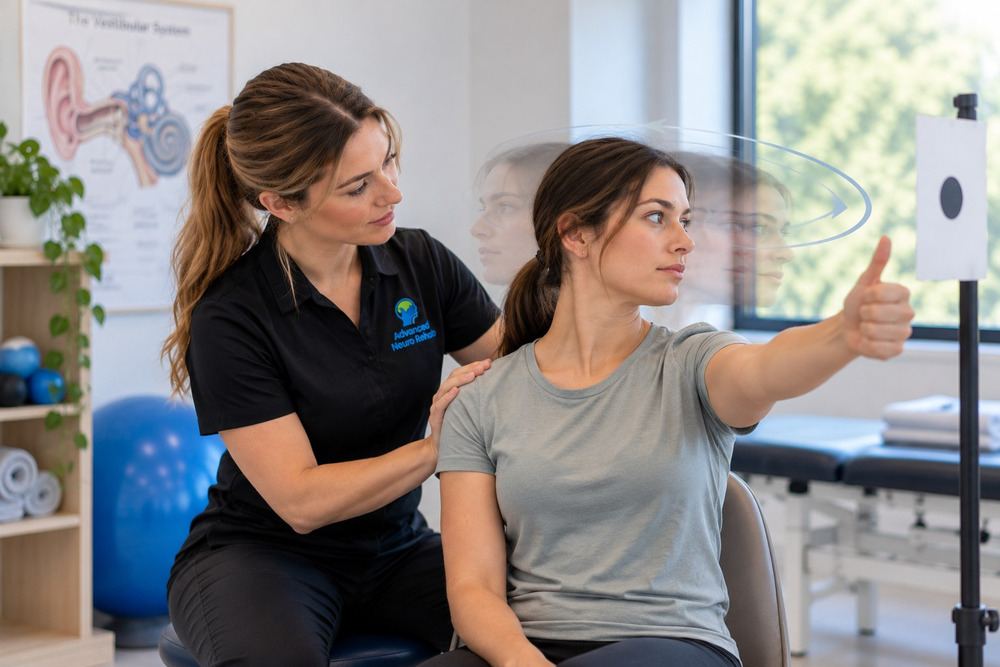
Your physiotherapist will develop an individualised rehabilitation program that may include:
- Gaze stabilisation exercises
- Head and eye movement exercises
- Balance retraining
- Walking and mobility exercises
- Habituation exercises for motion sensitivity
- Falls prevention strategies
- Progressive return to everyday activities
- Treat Secondary Benign Paroxysmal Positional Vertigo (BPPV)
These exercises encourage your brain to adapt to the changes in your vestibular system, helping restore confidence and improve your ability to move without dizziness.
Why Choose Advanced Neuro Rehab?
At Advanced Neuro Rehab, our neurological physiotherapists have extensive experience treating vestibular disorders, including vestibular neuritis. We work closely with your GP, ENT specialist and neurologist to ensure your rehabilitation complements your medical management.
Our goal is to help you recover as quickly and safely as possible, reduce your dizziness, restore your balance and get you back to your normal activities.
Links
Frequently Asked Questions
How long does vestibular neuritis last?
The most severe vertigo usually settles within a few days, but dizziness, balance problems and motion sensitivity can persist for weeks or months. Vestibular rehabilitation can help speed recovery and reduce ongoing symptoms.
Is vestibular neuritis the same as labyrinthitis?
No. Both conditions affect the inner ear, but vestibular neuritis affects only the balance nerve and typically does not cause hearing loss. Labyrinthitis affects both the balance and hearing organs, so hearing loss and tinnitus are more common.
Can physiotherapy help vestibular neuritis?
Yes. Vestibular rehabilitation is considered one of the most effective treatments for persistent symptoms. It helps retrain your brain to compensate for changes in the vestibular system, improving balance and reducing dizziness.
When should I seek medical attention?
If you experience sudden severe dizziness or vertigo for the first time, particularly if it is accompanied by weakness, difficulty speaking, double vision, severe headache or numbness, you should seek urgent medical assessment to rule out more serious conditions such as a stroke.
Book an appointment
Call (08) 8363 0458 or contact us to book at Royston Park, Goodwood and Christies Beach.
You do not usually need a referral to see a physiotherapist as a private client.
Funding can include private health insurance, Medicare rebates, DVA, the NDIS, ReturnToWorkSA, compulsory third-party insurance and the Lifetime Support Authority. Fees and Funding.