
At the ANR clinic, our staff work with individuals with many forms of dizziness, imbalance and disequilibrium. We are committed to ongoing professional development and learning including less common vestibular disorders.
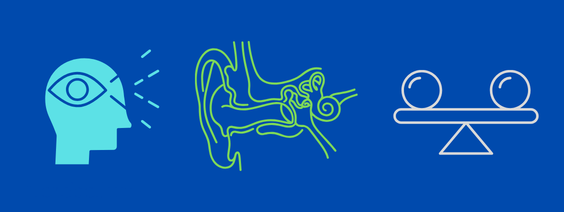
Dizziness can have different meanings for different individuals, and the symptoms our patients experience help inform our team what the underlying problem may be. Some people experience dizziness with an illusion of movement, spinning is a common symptom, and we call this rotatory vertigo. However, some dizziness may feel different, like rocking or swaying and unsteadiness when upright. For some people the sense of what is upright may be inaccurate. In these cases, the issue may be a different part of our balance system, or different parts of our vestibular organ.
Understanding the difference between our patients’ symptoms and the appropriate testing procedures allows our team to quickly assess and can guide a tailored rehabilitation strategy.
This week in our Staff Professional Development Session, we are learning about disorders in the perception of gravity; our ability to feel the pull of the earth, and correct our posture, neck, and eyes to accomodate to movement. Novel testing can include asking our patients to identify vertical, and also specialised oculomotor assessment (testing of eye movement). Current evidence supports new forms of rehabilitation for patients with a disorder of their gravity perception, offering the potential for better outcomes.
If you or someone you know has struggled to find the right treatment for unsteadiness, imbalance or symptoms of disequilibrium, the team at ANR may be able to assess for the underlying problem and suggest evidence based management strategies today.