
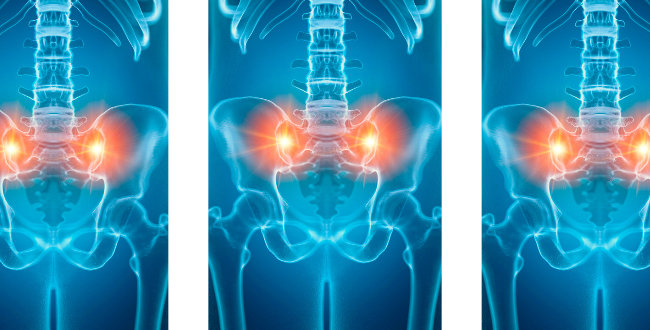
At Advanced Neuro Rehab, we are committed to ongoing learning to ensure we provide the best possible care for our clients. Each week, our team participates in professional development sessions. This week, we focused on the functional assessment and treatment of the sacroiliac joint (SIJ) and pelvis.
Most people experience lower back pain at some point in their lives. For some people with persistent lower back or pelvic pain, the sacroiliac joint can be a source of symptoms (Schwarzer et al., 1995).
The sacroiliac joints connect the pelvis to the lower part of the spine. Although movement at these joints is relatively small, the pelvis plays an important role in transferring forces between the trunk and the legs during activities such as standing, walking, climbing stairs and getting out of a chair. A range of muscles and ligaments contribute to the support and control of this region.
Common symptoms
People experiencing SIJ or pelvic pain may report:
- Pelvic or buttock pain that is aggravated by weight-bearing activities such as standing, walking, climbing stairs or moving from sitting to standing
- Deep pain around the pelvis or buttock, sometimes associated with clicking
- Buttock pain that may extend into the thigh
- Pain around the hip or side of the leg
- Groin pain
- Difficulty with activities that place uneven loads through the pelvis, such as standing on one leg or climbing stairs
Assessment
Our physiotherapists are skilled in assessing pain and movement involving the pelvis and SIJ. Because pain in this area can arise from several different structures, assessment is important rather than assuming that the SIJ is the source of the problem.
An assessment may include looking at:
- Movement quality and range of movement
- Activities or positions that reproduce symptoms
- Specific pain provocation tests
- Strength and muscle function around the pelvis, hips and trunk
- Joint mobility where appropriate
- Walking, balance and other functional movements
SIJ and pelvic pain can be influenced by several factors. These may include changes in strength and muscle control, reduced (stiff) or increased mobility, irritation of the joint and surrounding tissues, changes in load or activity, and the way forces are transferred through the pelvis during movement.
How can physiotherapy help?
Physiotherapy aims to identify the factors contributing to an individual’s pain and difficulty with movement and develop a treatment plan accordingly.
Treatment may include specific exercises to improve strength, control and confidence with movement; mobility or stretching exercises where appropriate; manual therapy; and advice about gradually returning to normal activities.
In some cases, a physiotherapist may recommend an SIJ or pelvic support belt for additional support while symptoms settle and strength and stability improve.
As with most musculoskeletal problems, there is no single treatment that is appropriate for everyone. A thorough assessment helps determine which strategies are most appropriate for each individual.