

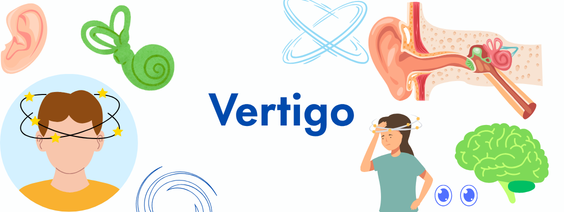
BPPV (Benign Paroxysmal Positional Vertigo) is a common cause of dizziness that many people think of as simple and easy to treat. However, some cases are more complicated or don’t fit the typical pattern. During our recent professional development session, we discussed these tricky types of BPPV and how we, as neuro physiotherapists, play a vital role in helping patients with these slightly more ‘stubborn’ types of BPPV.
Understanding the Different Types of BPPV
BPPV involves tiny crystals, called otoconia, that normally stay attached to a specific part of the inner ear called the utricle. With BPPV, these crystals become dislodged and move into other parts of the ear. When they break free, they can drift into different ear canals or become settled or stuck in places where they shouldn’t be. As these crystals move around inside the ear, they interfere with the normal balance signals sent to the brain, leading to dizziness, a sensation of spinning or moving, and difficulty maintaining balance.
Depending on where the crystals settle and how they move, the symptoms can vary — causing different types of dizziness, vertigo, or imbalance. In some cases, the crystals may block the canal entirely or stick to parts of the ear, making the dizziness even more complicated and harder to diagnose. This is why some people experience unusual or persistent symptoms, and why a careful assessment is needed to find the exact cause and choose the right treatment.
Why Our Expertise Matters
As neuro physiotherapists, we understand the ear’s anatomy and how these crystals move. This knowledge helps us figure out exactly what’s causing the dizziness, especially when it doesn’t look like typical BPPV. We use special tests and look for subtle signs that help us identify the right type of problem, even if it’s tricky. Some times it is an atypical form of BPPV, while at other times it can be something that mimics BPPV.
Personalized Treatments for Different Types
Not all BPPV can be treated with the same quick trick. Some patients need specific manoeuvres (special head movements) to move the crystals back to where they belong.
Sometimes, patients have dizziness without clear observable eye movements, or their symptoms only happen when they sit up. In these cases, we rely on detailed assessments and special tests to find the affected ear, canal and plan the right treatment. Explaining this to patients helps them understand their condition and feel more confident about the entire process.
Some treatments can cause brief episodes of intense dizziness or a feeling of falling, especially in older or weaker people. IN some people they may not even complain of ‘dizziness’! We know how to adjust the treatment to reduce this risk, making sure patients stay safe and comfortable.
Our job as neuro physiotherapists at ANR is to carefully assess, diagnose, and treat even the most complicated cases of BPPV. By staying up-to-date with the latest techniques and understanding the many different forms of this condition, we can help our patients feel better faster and avoid unnecessary frustration.